Baby Sleeping on the Moon: A Designer’s Craft Fair Review
As an embroidery designer who has spent countless weekends behind a booth table, I know that not every machine embroidery design translates into a bestseller. Some designs look stunning on a screen but fail to catch the eye of a passerby. Today, I am reviewing Baby Sleeping on the Moon, a piece from the Nursery category, specifically evaluating its potential for craft fair products and handmade market success. This is not just about aesthetics; it is about practical production, visual impact, and sales velocity.
First Impressions and Visual Appeal
The first thing I look for in a new embroidery file is immediate emotional resonance. The title alone suggests a soft, dreamy aesthetic. When I visualize Baby Sleeping on the Moon, I imagine a scene that is inherently calming and precious. For a craft fair environment, this design leans heavily into the "soft" and "cute" spectrum, with strong potential for a modern nursery vibe. It does not scream for attention like a bold geometric pattern might, but it invites a closer look. This is crucial for handmade product sales because it encourages customers to stop and engage with the item rather than just glancing and walking past.
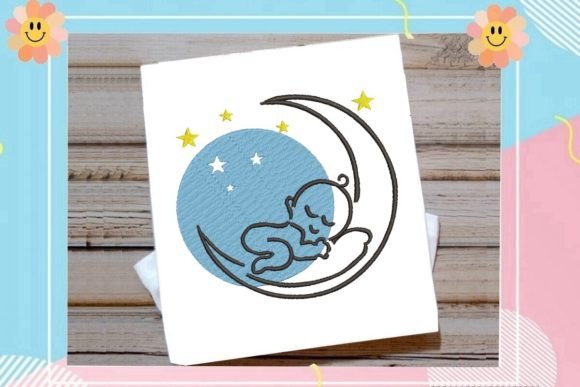
The imagery of a sleeping baby on a full moon captures a universal sentiment of peace. In a busy market setting, this tranquility can be a powerful differentiator. It feels decorative yet personal, making it an ideal candidate for gift-oriented buyers. However, the success of this mood depends entirely on execution. If the lines are too thick or the details too muddy, the delicate nature of the theme is lost. As a designer, I assess whether the design maintains its elegance when scaled down for smaller items or if it requires a larger canvas to breathe.
Product Versatility for the Craft Fair Booth
When planning my booth inventory, I need designs that work across multiple substrates. Baby Sleeping on the Moon shows promise as a versatile tote bag design. A natural cotton tote with this motif centered creates an instant heirloom-quality item for new parents. It also performs exceptionally well as apron embroidery for kitchen-themed gifts, though I would recommend placing it on the bib area for maximum visibility.
For tea towel embroidery, caution is required. Tea towels have a loose weave, which can distort fine details. If the design has dense stitch areas, it may pucker the fabric. I would suggest using a cut-away stabilizer and testing on a high-quality linen blend rather than a cheap terry cloth. Additionally, this design is perfect for an embroidered patch. Patches are low-commitment purchases for customers, and a moon-themed patch can be ironed onto denim jackets or baby blankets, expanding the product line without requiring large hoop setups.
Pillow covers are another obvious choice. A square pillow with the moon motif centered acts as a focal point in a nursery. However, for caps, the curved surface presents a challenge. The design must be narrow enough to fit the front panel without wrapping around the sides, which can cause distortion during wear. I always advise checking the width of the design against standard cap hoops before committing to batch production.
Production Practicality and Batch Efficiency
From a production standpoint, time is money. A design that takes four hours to stitch is rarely profitable for small craft fair product margins unless the price point is very high. I evaluate Baby Sleeping on the Moon based on its likely stitch efficiency. Designs with excessive stitch density not only take longer but also use more thread, increasing costs.
I recommend reviewing the thread colors suggested by the designer. Soft pastels—blues, creams, and pale yellows—will enhance the sleepy theme, but they must contrast enough with the fabric to be visible from three feet away. If you are stitching on white fabric, ensure the moon has a subtle outline or shadow to prevent it from disappearing. For dark fabrics, you may need to adjust the color palette or add a light-colored underlay to make the design pop.
Batch production is key to surviving a weekend market. Can you hoop five tote bags and let the machine run while you talk to customers? If Baby Sleeping on the Moon is optimized for speed, it becomes a staple item. If it requires frequent thread changes or complex trimming, it may be better suited for made-to-order Etsy seller listings rather than impulse-buy booth stock.
Careful-Use Notes for Designers
- Dense Stitch Areas: Check for overlapping stitches that could cause puckering, especially on lightweight fabrics like muslin or voile.
- Tiny Details: Ensure facial features of the baby are not so small that they become indistinct blobs after washing.
- Fabric Texture: Avoid using this design on highly textured towels unless you use a water-soluble topping to keep stitches from sinking into the pile.
- Curved Surfaces: For caps, verify that the design height does not interfere with the seam of the cap’s front panel.
- Small Lettering: If the design includes text, ensure it is legible at smaller sizes. Tiny script often fails in embroidery.
Enhancing Brand Consistency and Buyer Engagement
Using Baby Sleeping on the Moon consistently across your product line strengthens your brand identity. If your shop focuses on nursery items, this design becomes a signature element. It helps create a cohesive look that customers recognize. When you display a matching set—a tote, a pillow, and a patch—using the same motif, you increase the perceived value. Customers are more likely to buy a bundle than a single item.
Photography plays a massive role in online sales. This design photographs beautifully for printable mockup creation and live listings. The circular shape of the moon frames the subject nicely, creating a natural focal point in photos. Use natural light to highlight the texture of the stitches. For your Etsy listings, include close-up shots that show the quality of the satin stitches and the cleanliness of the backing. This reassures buyers of the finished product quality.
Technical Checklist Before Production
Before you stitch your first saleable item, follow these professional steps:
- Test on Scrap Fabric: Always run a test stitch on the exact fabric you plan to sell. Different brands of cotton behave differently.
- Check Thread Contrast: Ensure the moon stands out against the background. Adjust thread colors if necessary.
- Review Spacing: Confirm that elements are not too close together, which can cause thread breaks.
- Confirm Hoop Size: Verify that the design fits your available hoops. A design that requires a 5x7 hoop limits your product options compared to one that fits in a 4x4.
- Inspect Stitch Density: Look for areas that are overly dense and consider editing them if your software allows.
- Use the Right Stabilizer: Match the stabilizer to the fabric weight. Cut-away for stretchy knits, tear-away for stable wovens.
- Create Real Mockups: Photograph the actual stitched item, not just the digital file.
- Compare Fabric Colors: Test the design on white, cream, and pastel fabrics to see which yields the best result.
- Confirm Commercial Licensing: Ensure your purchase of the digital embroidery file includes rights for commercial use. Never assume; always read the terms.
In conclusion, Baby Sleeping on the Moon is a strong contender for any small shop product lineup focused on babies and nurseries. Its emotional appeal is high, and its versatility allows for diverse product offerings. By paying attention to technical details like stabilizer choice and stitch density, you can transform this design asset into a reliable revenue stream for your embroidery business. Remember, the best designs are those that balance artistic beauty with production efficiency.