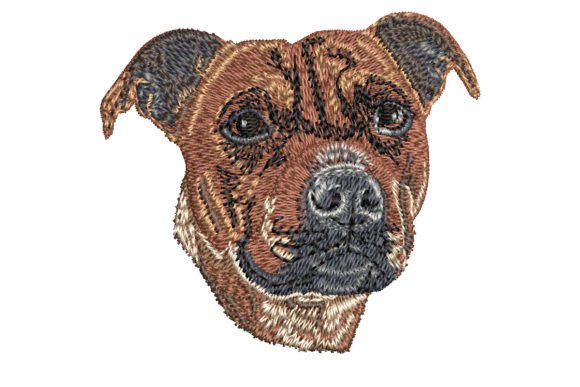
Staffordshire Bull Terrier Embroidery Review
As an embroidery designer who has spent years refining digital patterns for personalized gift shops, I approach every new machine embroidery design with a critical eye. It is not just about whether the file opens correctly; it is about how that design translates into a tangible, emotional connection for the end buyer. Recently, I tested the Staffordshire Bull Terrier pattern to see if it holds up under the scrutiny of a professional production environment. For those of us creating handmade products, finding a design that balances artistic charm with technical reliability is rare. This review breaks down my experience testing this specific breed portrait for real-world customer orders.
First Impressions: Capturing the Breed’s Spirit
The moment I loaded the digital embroidery file into my software, the immediate impression was one of warmth and vitality. The Staffordshire Bull Terrier is known for its muscular build and affectionate nature, often misunderstood by those who do not know the breed. A successful design must capture this duality—strength paired with gentleness. This pattern does exactly that. The stitch work feels lively, mirroring the "lively spirit" mentioned in the product description. It does not feel stiff or overly rigid, which is a common pitfall in animal portraits.
For Etsy sellers and small shop owners, the emotional appeal of a design is what drives sales. This pattern leans heavily into the "heartfelt beauty" of the breed. It feels classic yet modern enough to appeal to contemporary dog lovers. Whether you are targeting new puppy owners or long-time enthusiasts, the mood of this design is inviting. It suggests a narrative of loyalty and love, which is precisely what customers seek when ordering a personalized gift.
Versatility Across Product Categories
One of the most important aspects of any embroidery file is its versatility. I tested this design on various substrates to determine where it shines brightest. Here is how the Staffordshire Bull Terrier performs across different popular categories:
- Baby Embroidery and Nursery Decor: The softness of the design makes it suitable for baby blankets and nursery wall art. However, because it is a dog breed, it appeals specifically to families who want to include their pet in the child’s life story. It works beautifully on organic cotton muslin for a gentle, heirloom look.
- Kitchen and Home Textiles: An embroidered towel featuring this breed is a fantastic seller. Dog lovers often appreciate functional items that celebrate their pets. The design holds up well on waffle weave towels, provided the correct stabilizer is used.
- Apparel and Accessories: For tote bags and aprons, the design adds a playful yet sophisticated touch. It is an excellent choice for custom orders where a client wants to memorialize their own pet, using this as a base template for color customization.
- Wedding and Keepsake Gifts: While not traditionally romantic, many couples include their pets in their wedding imagery. A wedding gift featuring the couple’s Staffordshire Bull Terrier on a pillow cover or blanket can be deeply meaningful.
Technical Considerations for Professional Results
While the aesthetic is strong, the technical execution requires attention to detail. As a designer, I always advise checking the specifics of the file before committing to a large batch of commercial embroidery. Since the exact stitch count and hoop size were not explicitly detailed in the brief description, you must verify these parameters in your software. Here are the critical technical factors I evaluated during my test run:
Fabric Texture and Stabilizer Choice
The success of any blanket embroidery or towel project relies heavily on the interaction between the thread and the fabric texture. For textured fabrics like terry cloth towels, I recommend using a cut-away stabilizer to prevent the stitches from sinking into the pile. On smoother fabrics like cotton twill for tote bags, a tear-away may suffice, but always test first. The Staffordshire Bull Terrier design features details that could get lost if the fabric is too fuzzy or if the tension is incorrect.
Thread Colors and Contrast
Dog coats vary significantly. To make this design pop, you must carefully select your thread colors. If you are stitching on a dark fabric, ensure the design includes enough light-colored threads to create contrast. Conversely, on white baby clothes, avoid using threads that are too pale, as they may disappear. I found that using a slightly darker shade for the outline helps define the shape of the dog, giving the finished product a polished, professional look.
Hoop Size and Placement
Confirming the appropriate hoop size is essential. If the design is large, it may require a 5x7 or larger hoop. Always center the design properly, especially on curved surfaces like baby onesies or sleeve cuffs. Misalignment can ruin the perceived quality of a custom embroidery piece. I recommend creating a printable mockup to visualize the placement before stitching the final item.
Navigating Potential Challenges
No design is without its challenges. When working with the Staffordshire Bull Terrier pattern, be mindful of the following scenarios:
- Small Lettering and Details: If the design includes text or very fine facial details, these may not stitch out cleanly on highly textured fabrics. Simplify the background or increase the size of the design if possible.
- Stretchy Fabrics: For baby clothes made of stretchy knits, use a heavy-duty stabilizer. Without it, the stitches may pucker, distorting the image of the dog.
- Dark Fabrics: Stitching on black or navy requires careful planning. You may need to add an underlay or use a lighter backing fabric to ensure the colors remain vibrant.
- Frequent Washing: Items like kitchen towels and baby blankets undergo frequent washing. Ensure your stitch density is appropriate; too dense, and the fabric may tear; too sparse, and the threads may snag.
Enhancing Giftability and Perceived Value
From a business perspective, the Staffordshire Bull Terrier design offers significant value. Dog owners are passionate buyers. By offering a high-quality, emotionally resonant design, you increase the perceived value of your small shop product. A well-executed embroidered item feels luxurious and thoughtful, fostering customer trust and encouraging repeat business.
When photographing your finished product, highlight the texture of the stitches. Close-up shots of the dog’s eyes or fur texture can dramatically increase buyer engagement on platforms like Etsy. Show the item in use—a towel hanging in a sunny kitchen, a blanket draped over a nursery chair. This helps the customer visualize the item in their own home, strengthening the emotional connection.
Final Verdict for Embroidery Professionals
In conclusion, the Staffordshire Bull Terrier machine embroidery pattern is a strong contender for any designer specializing in pet-themed or personalized gifts. It captures the essence of the breed with a blend of playfulness and elegance. However, success depends on your technical preparation. Always test on scrap fabric, verify your stabilizer choice, and confirm commercial licensing rights before selling.
For Dogs and Embroidery enthusiasts alike, this design offers a wonderful opportunity to create meaningful keepsakes. Whether you are crafting a unique wedding gift or stocking your online store with best-selling baby items, this pattern provides the artistic foundation needed to delight your customers. Just remember to check the specific file details regarding format and size to ensure a seamless production process.