Reviewing the Gingerbread Man Christmas Ornament Design
As a designer who spends more time staring at stitch maps than actual fabric, I have learned that not every festive graphic translates well into thread. We have all been there: you see a cute digital preview, buy the digital embroidery file, and then watch in horror as your machine turns a charming character into a puckered mess. That is why I approach every new seasonal release with a healthy dose of skepticism. Recently, I pulled up the Gingerbread Man Christmas Ornament design to evaluate its potential for real-world application. My goal was not just to admire the artwork, but to determine if it holds up under the needle for commercial and personal projects alike.
First Impressions and Visual Personality
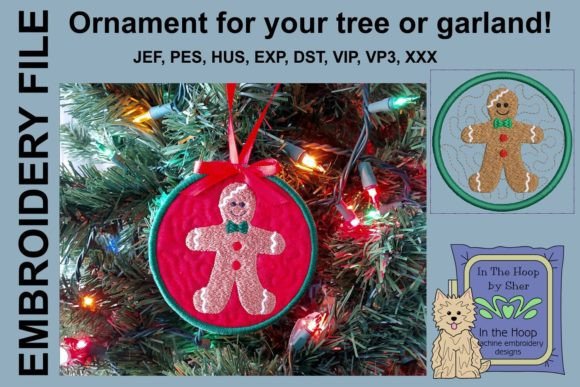
The first thing that strikes you about this design is its inherent warmth. It does not rely on flashy gradients or overly complex shading to make an impact. Instead, it leans into the timeless appeal of traditional holiday motifs. The layout is balanced, with a clear focal point that draws the eye immediately to the gingerbread figure. For a designer, this clarity is crucial. When you are working with thread colors that have limited tonal range compared to digital screens, simple, strong shapes often perform better than intricate illustrations.
The mood here is nostalgic and inviting. It feels like something you would find in a high-end boutique rather than a discount bin. This visual personality makes it versatile. It is not just for children’s items; it has a sophistication that allows it to work on adult apparel and home decor. The details are intricate enough to show off the quality of your machine work, yet they are not so dense that they risk becoming a bird’s nest of broken threads. This balance is rare in holiday designs, which often swing too far toward either simplicity or excessive complexity.
Real-World Application and Project Fit
To truly test the viability of the Gingerbread Man Christmas Ornament, I imagined several specific use cases. My primary test scenario involved a custom tote bag design for a local bakery’s holiday gift set. Canvas is a forgiving fabric, but it requires a design that can hold its shape without pulling the weave too tightly. I envisioned this design placed centrally on a natural cotton tote, paired with rich browns, creams, and a pop of red for the bow. The result would be a sturdy, reusable handmade product that customers would actually want to keep and use.
Beyond totes, this design shines in sweatshirt embroidery. A crewneck sweatshirt provides a stable, thick surface that handles fill stitch areas beautifully. Placing the gingerbread man on the left chest creates a subtle, professional look suitable for small business merchandise or staff uniforms during the holiday rush. Alternatively, scaling it up for the back of a jacket could create a statement piece for a craft fair booth. The key here is versatility. Whether you are an Etsy seller looking to expand your holiday catalog or a hobbyist making gifts for family, this design adapts well to different scales.
I also considered its use in baby embroidery. While the details are intricate, they are not so fine that they would unravel easily after washing, provided the correct stabilizer is used. A onesie or a burp cloth featuring this motif would make a delightful personalized gift. However, for baby items, I would recommend simplifying the color palette to soft pastels or classic neutrals to maintain a gentle aesthetic.
Technical Considerations and Stitching Performance
From a technical standpoint, the execution of this design requires attention to detail. The description mentions "intricate details," which usually implies a mix of satin stitch borders and running stitch accents. Satin stitches provide that glossy, raised look that defines premium embroidery, but they can be tricky on textured fabrics. If you are stitching this on a waffle-knit towel or a rough linen, you must ensure your stitch density is appropriate. Too dense, and the fabric will pucker; too loose, and the backing will show through.
One critical area to watch is the smaller decorative elements. In many holiday designs, tiny details like eyes or buttons can get lost or cause thread breaks if the needle size is not matched correctly to the thread weight. I strongly advise running a test stitch-out on scrap fabric before committing to your final garment. This is especially important if you are using metallic threads, which are popular for holiday themes but notoriously fragile. A test run allows you to adjust tension and check for any registration issues between color stops.
Fabric choice plays a massive role in the final outcome. On dark fabrics, you need to ensure there is a proper underlay or that the design includes a solid fill to prevent the background color from peeking through. Conversely, on light or thin fabrics, you might need a cut-away stabilizer to support the weight of the stitches. If you are planning to use this on stretchy materials like jersey knits for t-shirts, a hoopless frame or a specialized stabilizer setup is non-negotiable to prevent distortion.
Commercial Viability and Brand Value
For those running a craft business, the visual appeal of a design directly impacts perceived value. The Gingerbread Man Christmas Ornament exudes professionalism. It does not look like a clip-art afterthought. Using high-quality design assets like this helps build customer trust. When a buyer sees clean lines, consistent stitch direction, and thoughtful color transitions, they associate that quality with your brand. This is essential for standing out in saturated markets like Etsy or local craft fairs.
Moreover, this design lends itself well to commercial embroidery projects. Imagine offering a limited-edition run of embroidered aprons for a cooking class or branded patches for a holiday event. The timeless nature of the gingerbread theme means it does not feel tied to a specific year’s trend, allowing you to potentially reuse the design in future seasons with minor color tweaks. This longevity increases the return on investment for the embroidery file.
Practical Designer Notes
- Check Licensing: Before selling any finished product, always confirm the license terms of the digital file. Some creators allow unlimited sales, while others have caps.
- Test on Scrap: Never skip the test stitch. Use the same fabric and stabilizer combination you plan to use for the final item.
- Contrast Matters: Ensure your thread colors contrast sufficiently with the fabric. A brown gingerbread man on a dark chocolate brown shirt will disappear.
- Hoop Size: Verify the required hoop size. While likely standard, ensuring your machine’s hoop accommodates the design dimensions prevents last-minute panic.
- Mockups: Create printable mockup images to showcase the design on various products before you even stitch a single thread. This helps in marketing and pre-sales.
In conclusion, the Gingerbread Man Christmas Ornament is a solid addition to any holiday design library. It balances charm with technical feasibility, making it suitable for a wide range of applications from custom apparel to home decor. By respecting the technical requirements of embroidery and choosing the right materials, you can transform this digital asset into a tangible product that delights customers and enhances your brand’s reputation. It is a reminder that good design is not just about how it looks on screen, but how it lives in the real world.